Businesses must recognise the cybersecurity risks they face and implement strategies to prevent data breaches, which can lead to significant disruptions and financial losses. By understanding the factors that influence costs, companies of all sizes can effectively reduce their expenditures related to data breaches.
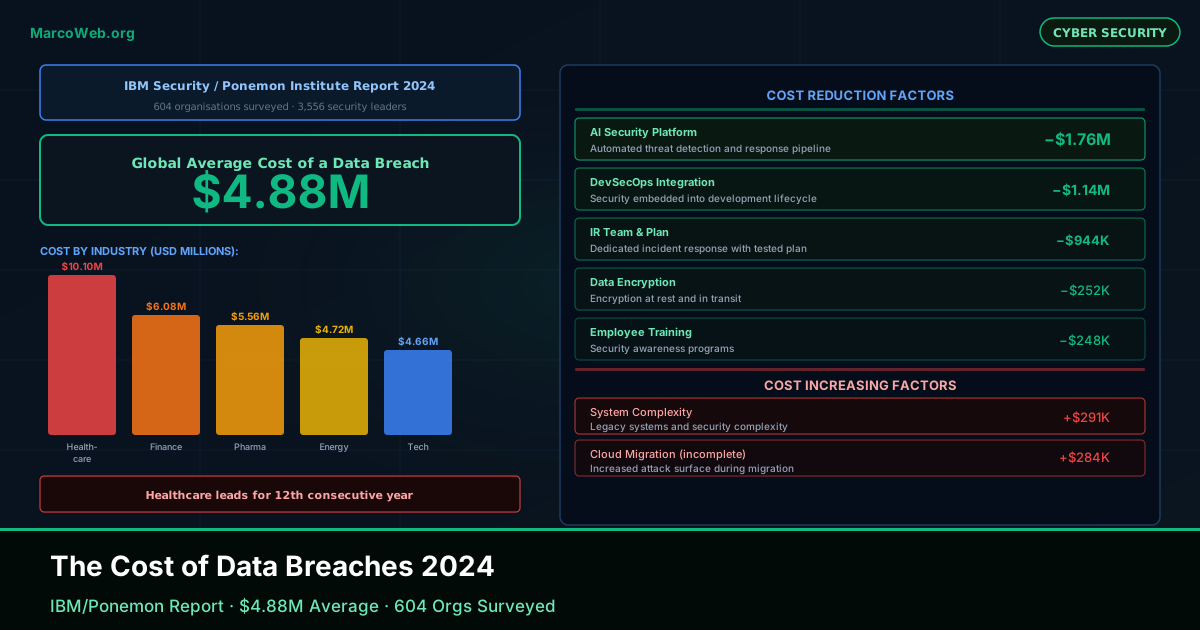
This analysis draws from IBM’s Cost of a Data Breach report, based on data from 604 organisations and feedback from 3,556 cybersecurity and business leaders affected by breaches, compiled by IBM and the Ponemon Institute.
Cost by Industry Sector
The report highlights significant variation in breach costs across different industries. Healthcare continues to lead as the most expensive sector for the 12th consecutive year:
| Sector | 2021 Cost | 2022 Cost | Change |
|---|
| Healthcare | $9.23M | $10.10M | +9.4% |
| Financial | $5.72M | $5.97M | +4.4% |
| Pharmaceutical | $4.97M | $5.01M | +0.8% |
| Technology | N/A | N/A | ↑ slight |
| Energy | N/A | N/A | ↑ slight |
Healthcare’s high cost reflects the sensitivity of patient data and the operational impact of system downtime.
Factors That Reduce Breach Costs
Organisations can significantly reduce breach costs by implementing the following controls:
| Practice | Average Cost Reduction |
|---|
| AI security platform | Largest reduction |
| DevSecOps approach | Significant |
| Incident Response (IR) team | Significant |
| Extensive encryption | $252,088 |
| Employee training | $247,758 |
| Regular IR plan testing | $246,889 |
| Identity & Access Management | $224,396 |
| Security analytics | $217,317 |
| Multifactor Authentication | $186,765 |
| Red team testing | $204,375 |
Factors That Increase Breach Costs
Conversely, certain factors contribute to rising breach costs:
| Factor | Average Cost Increase |
|---|
| Security system complexity | $290,655 |
| Cloud migration challenges | $284,292 |
| Third-party involvement | $247,624 |
| Compliance failures | $258,293 |
| Lost or stolen devices | $227,420 |
| Shortage of security skills | $206,843 |
| IoT/OT environment challenges | $201,354 |
| Remote work issues | $152,465 |
Key Takeaways
This analysis emphasises the importance of adopting proactive cybersecurity measures and continuous investment in both technology and human resources.
By prioritising:
- AI security platforms
- Employee training
- Encryption
- Incident response readiness
…organisations can significantly mitigate the financial impact of data breaches.
Addressing issues like system complexity, compliance failures, and third-party risks is equally crucial in an increasingly digital and interconnected world.